Tandil Collaboration Index
Master's thesis in Strategic Management and Technology · ITBA · 2025
How the actors of Tandil's innovation-driven entrepreneurial ecosystem collaborate: 77 actors, 325 collaborations and an index of 7.47, among the highest measured with the TE-SER model.
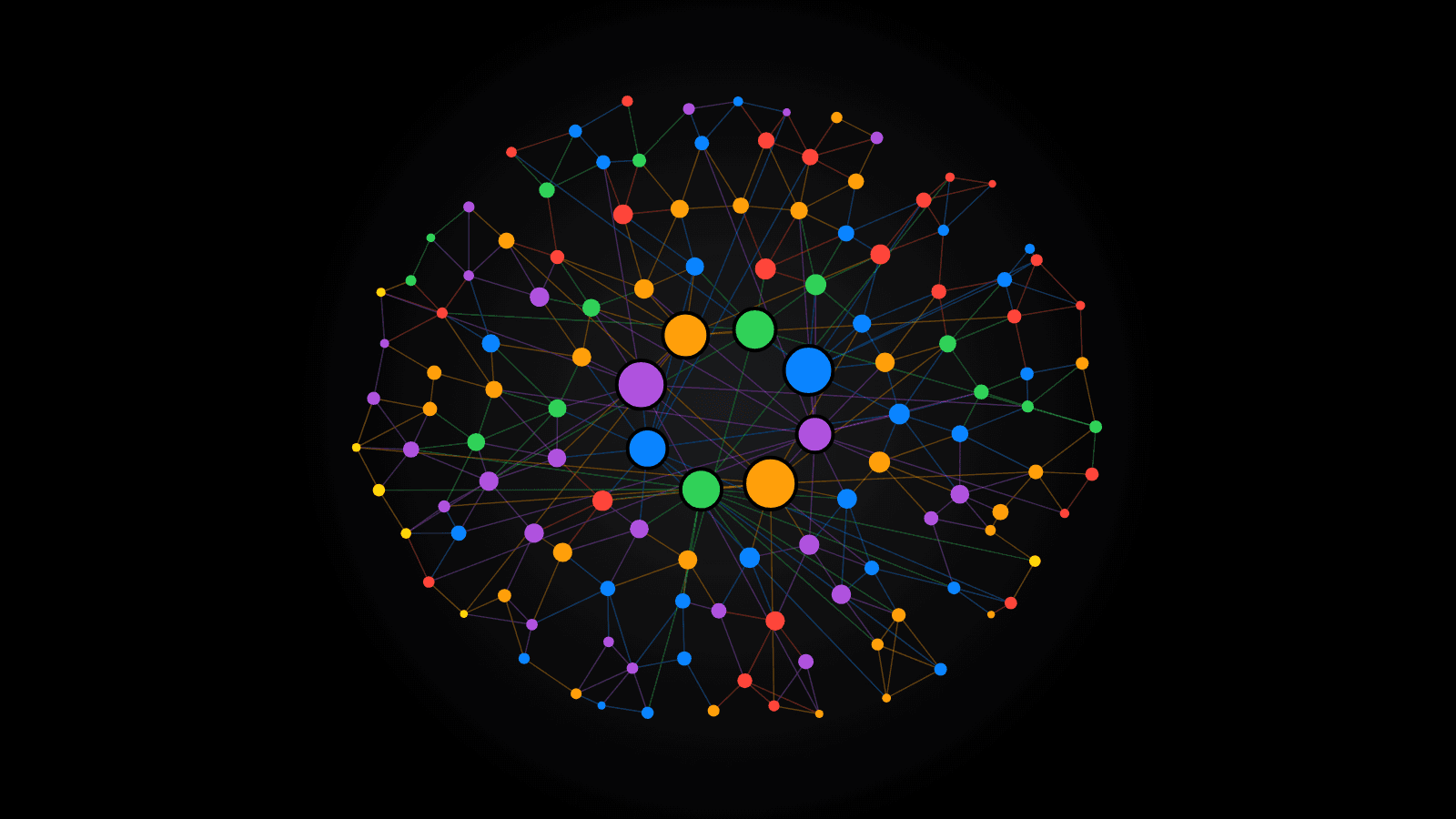
Description
The thesis analyses Tandil's innovation-driven entrepreneurial ecosystem with the TE-SER model (Tedesco and Serrano, 2019), which classifies organisations by the role and value they bring: Articulators, Connectors, Knowledge Generators, Enablers, Promoters and Communities. Through interviews with 27 of the 38 invited actors and Social Network Analysis, it maps the collaborations of the last three years and compares Tandil's structure with Buenos Aires, Valencia and other ecosystems in Argentina, Latin America and Spain. Data were processed with Global Ecosystem Dynamics.
Problem or opportunity
Is the level of collaboration among the actors driving innovation and new ventures in Tandil equal to or higher than in comparable ecosystems? If so, it could explain much of the city's economic growth in recent decades.
Objectives
- Survey the ecosystem using the TE-SER model framework.
- Identify the ecosystem's structure and the institutions involved.
- Compare Tandil with similar ecosystems in Argentina and worldwide.
Research findings
Tandil collaborates more than most.
Data from the study of Tandil's innovation-driven entrepreneurial ecosystem, surveyed in 2023 and 2024 with Global Ecosystem Dynamics' TE-SER model. Documents are in Spanish.
Collaboration Index
7.47
Among the highest measured with TE-SER in over 20 ecosystems.
77
actors identified
325
collaborations mapped
in the last 3 years
27 / 38
actors took part of 38 invited
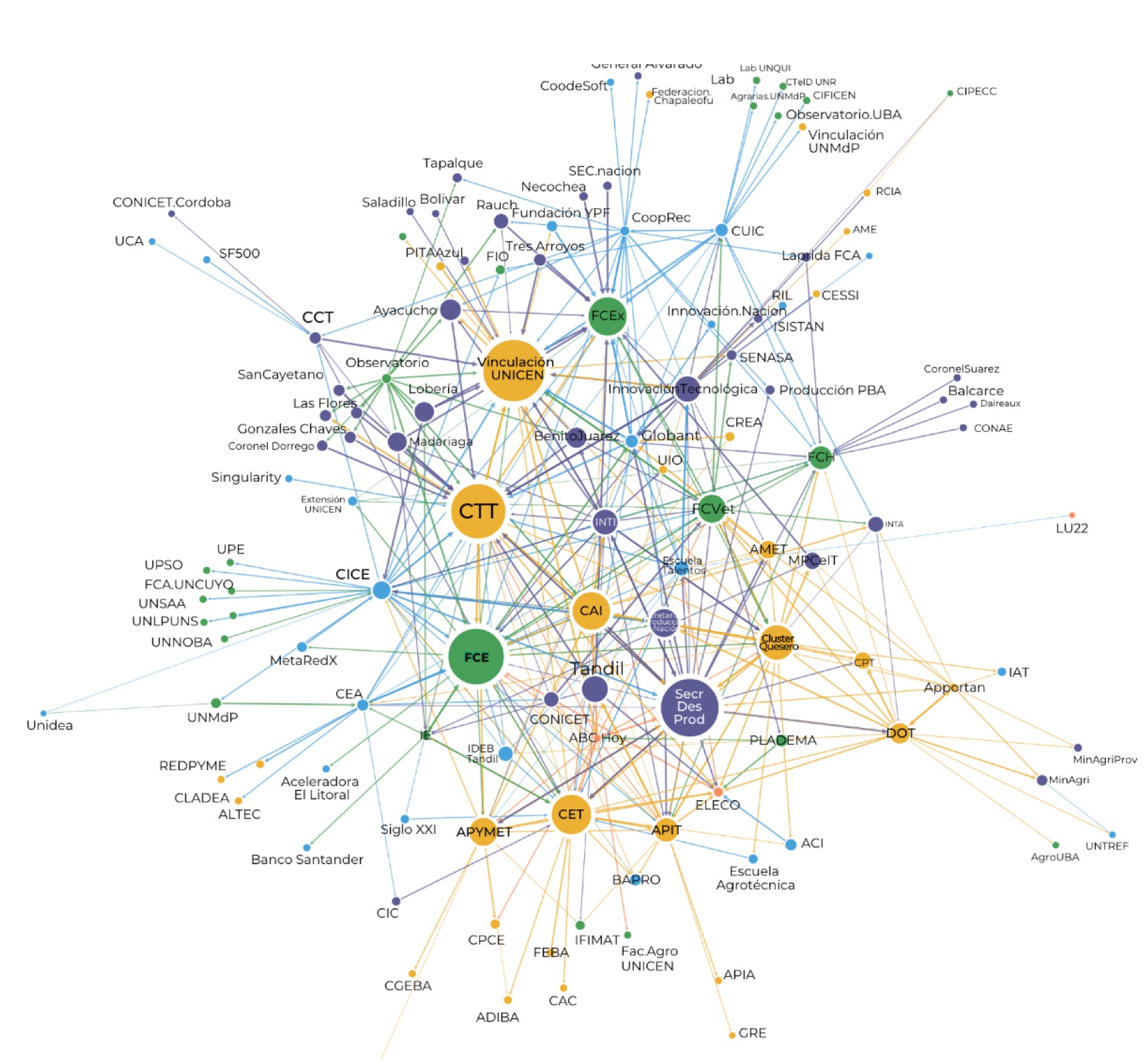
Ecosystem sociogram
Each node is an organisation and each line a collaboration. The circular shape, with redundant links from the centre to the edge, points to a system that tends to stability.
Collaboration Index by ecosystem
- Tandil7.47
- Valencia7.31
- Average of the ecosystems studied6.02
- Buenos Aires5.60
- São Paulo (the lowest)4.85
Source: thesis, Table 5 (adapted from Tedesco et al., 2024) and p. 60.
How collaborations end
97%
were successful
2%
never happened
TE-SER model roles
- Articulators39 · 31%
Create and run public policies and coordination strategies.
- Connectors30 · 24%
Connect the ecosystem: business chambers, networks and clusters.
- Knowledge generators26 · 21%
Develop new technologies and knowledge: research and development centres.
- Enablers26 · 21%
Provide resources: incubators, accelerators, investment funds and coworkings.
- Promoters3 · 2%
Tell the ecosystem's stories: traditional and digital media.
- Communities0 · 0%
Share knowledge among entrepreneurs. None were identified in Tandil.
Number of actors by role (Table 4). No Communities were identified and there are very few Promoters.
Why they collaborate
- Joint projects51%
- Knowledge and good-practice exchange27%
- Media coverage7%
- Other reasons5%
- Monetary resources4%
- Access to networks3%
Network metrics
| Tandil | Buenos Aires | Valencia | Average | |
|---|---|---|---|---|
| Global efficiency | 0.39 | 0.32 | 0.37 | 0.33 |
| Rich-club coefficient | 0.96 | 0.46 | 0.56 | 0.46 |
| Average eccentricity | 3.93 | 4.87 | 4.23 | 3.93 |
| Central point dominance | 0.15 | 0.17 | 0.12 | 0.15 |
| Average clustering coefficient | 0.50 | 0.34 | 0.38 | 0.36 |
| Modularity | 0.37 | 0.59 | 0.37 | 0.51 |
| Average shortest path | 2.84 | 3.40 | 3.01 | 3.39 |
| Average collaborations | 13.59 | 13.29 | 15.05 | 12.23 |
| Transitivity | 0.28 | 0.08 | 0.25 | 0.15 |
| Collaboration Index | 7.47 | 5.60 | 7.31 | 6.02 |
Complex Network Analysis (Table 5). In green, Tandil's value when it is the best of the three cities.
What the study shows
Strength
Hypothesis confirmed
Collaboration among Tandil's actors matches or exceeds comparable ecosystems: 7.47, among the highest measured with TE-SER.
Strength
Distributed leadership
Low central point dominance (0.15) and a very high rich-club coefficient (0.96): several gravitational centres hold the network.
Strength
UNICEN as a gravitational centre
Its schools and institutes are hubs of the network, linked to at least 15 cities in the region.
Challenge
Too few Enablers
Few investment funds, accelerators and incubators to bring knowledge and innovation to market.
Challenge
No Communities, few Promoters
No entrepreneur communities were identified, and few actors spread success stories.
Challenge
Formal agreements help
Collaborations that failed or never happened share the lack of a formal agreement.
Documents
How to cite it: Errandosoro, F. D. (2025). Ecosistema de emprendimiento basado en la innovación de Tandil. Tesis de Maestría en Dirección Estratégica y Tecnología, Instituto Tecnológico de Buenos Aires.
Related projects
 In development
Research / Digital Transformation / Technology
Digital Maturity Index
An interactive platform to assess the digital maturity of organisations, identify technology gaps and design digital transformation plans.
Role: Co-author of the academic model
Digital transformationDigital maturitySMEsUNICENStart the assessmentExplore project → In development
Research / Education
Entrepreneurial profile assessment platform
A test to understand the entrepreneurial profile of each person and their team: 10 competencies, applied knowledge, decision style and a development plan.
Entrepreneurial competenciesTeamsAssessmentTake the testExplore project → Closed beta
Research / Data
ITBA Entrepreneurial Impact Platform
A platform that analyses the startups founded by ITBA students and graduates and their economic, technological and entrepreneurial impact.
StartupsDataITBAExplore project →